Ukraine Foundation
Inspiring Change, Driving Impact

In this landmark article, Dr. Nicholas Krohley, our Senior Fellow for Irregular Warfare and the Human Dimension of Conflict, explored the evolving nature of civilian resistance in the face of Russia’s ongoing war against Ukraine. His research offers deep insights into how everyday Ukrainians, including women and decentralized networks, are shaping resilience and resistance in occupied territories.

In “Ukrainian Civilians Are Pioneering the Art of Resistance,” he examines how nonviolent and grassroots movements have adapted to the brutal conditions of occupation, asserting agency in ways that complement Ukraine’s broader defense strategies. His analysis highlights the emergence of novel civil society responses —from digital organization to symbolic and material acts of dissent— underscoring the central role of societal initiative in sustaining Ukraine’s national will and undermining Russian control.
Drawing on detailed examples and narratives from occupied regions, Dr. Krohley’s piece sheds light on lesser-known facets of resistance that have significant implications for understanding modern conflict dynamics, the role of women in resistance movements, and the potential for civilian networks to influence both strategic outcomes and international perceptions of the war.
As the war enters its fourth year, his scholarship fosters a richer appreciation of the complex interplay between armed struggle and civil resistance.
Ukraine Foundation celebrates his important contribution to global discourse on conflict, resilience, and the power of civic agency in times of crisis, and encourages our community to read the full article on Foreign Policy and engage with the ideas it presents as part of our ongoing efforts to deepen understanding of Ukraine’s struggle and the diverse forms of resistance that sustain it.

We are proud to highlight the latest publication by our Senior Fellow, Irregular Warfare and Human Dynamics of Conflict, Dr. Nicholas Krohley, in War on the Rocks. In his commentary, “Anchoring Intelligence: Ground Truth in an Age of Synthetic Deception,” Dr. Krohley examines how the rapid rise of artificial intelligence and emerging agentic AI capabilities are transforming the information environment and challenging traditional understandings of military intelligence.
Dr. Krohley argues that while AI‑enabled platforms promise unprecedented speed and precision in processing battlefield data, they remain fundamentally dependent on the quality of their inputs. Without structured, human‑generated “ground truth,” even the most advanced systems risk producing a distorted picture of reality — especially as adversaries leverage synthetic content and automated disinformation at scale. To address these challenges, he calls for a two‑pronged response: developing machine‑based defenses against synthetic deception and, crucially, ensuring that human‑sourced insights are systematically integrated into analytical workflows to anchor AI analysis in the real world.
This publication draws on Dr. Krohley’s deep expertise at the intersection of intelligence, conflict dynamics, and the evolving role of AI in security environments. His work underscores the enduring importance of human judgment and ground‑level insight amidst rapid technological change — a theme that resonates with our Foundation’s commitment to rigorous, context‑aware analysis in support of Ukraine’s defense and broader democratic security.
Read the full article on War on the Rocks and join the conversation on how emerging technologies are reshaping strategic realities.
Ivano-Frankivsk: Ukraine Foundation’s Senior Fellow for Irregular Warfare and the Human Dimension of Conflict, Dr. Nicholas Krohley, addressed a high-level conference on the protection of critical infrastructure
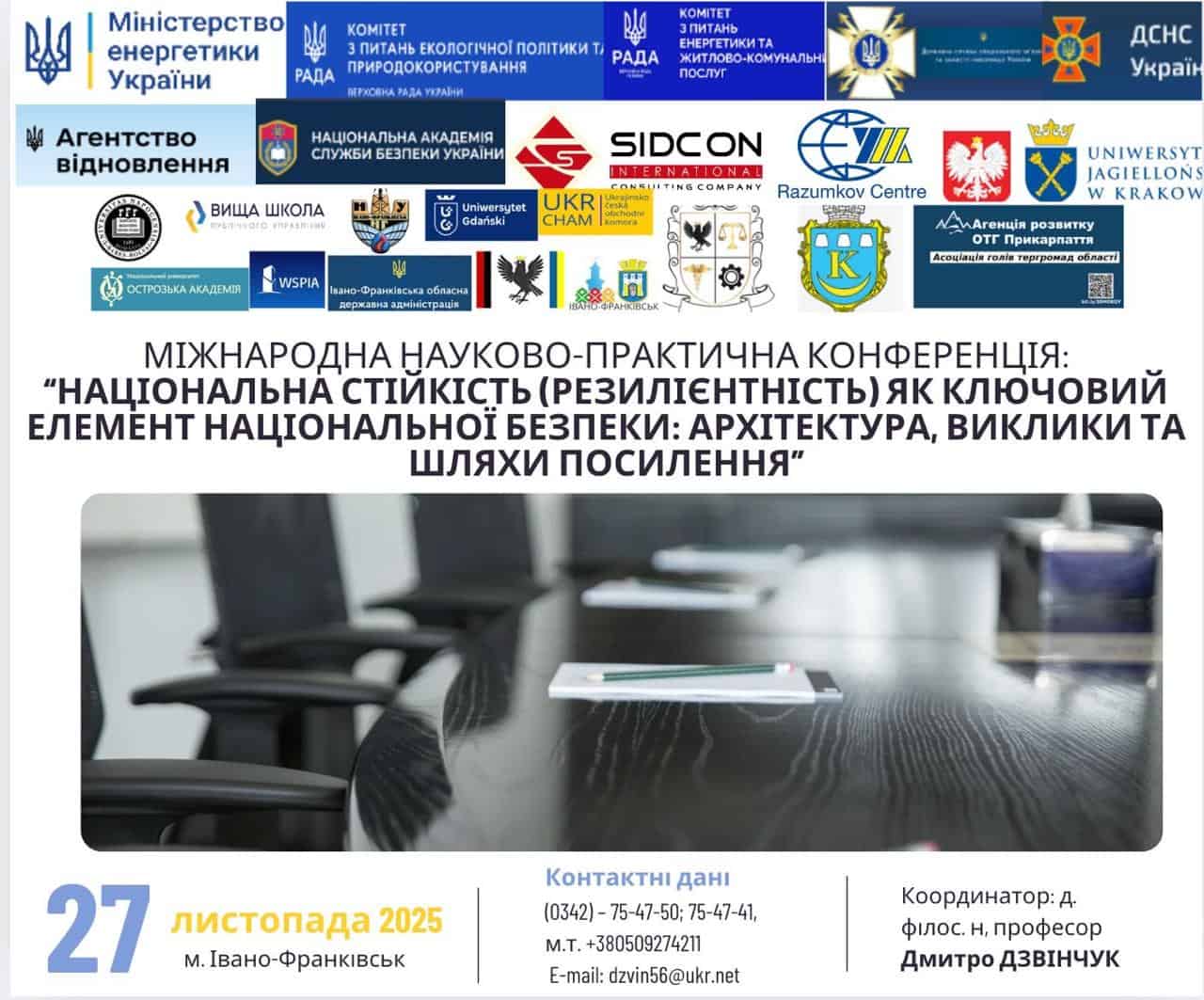
The event was organized by a broad coalition of Ukraine’s leading national institutions working at the intersection of security, governance, and resilience. Key organizers include the Ministry of Energy of Ukraine, the Verkhovna Rada Committees on Energy and on Environmental Policy, the State Service of Special Communications and Information Protection (DSSZZI), the State Emergency Service (DSNS), the State Agency for Restoration and Infrastructure Development, and the National Academy of the Security Service of Ukraine—alongside prominent academic institutions from Ukraine, Poland, Romania, and the Czech Republic.
The event was organized by a broad coalition of Ukraine’s leading national institutions working at the intersection of security, governance, and resilience. Key organizers include the Ministry of Energy of Ukraine, the Verkhovna Rada Committees on Energy and on Environmental Policy, the State Service of Special Communications and Information Protection (DSSZZI), the State Emergency Service (DSNS), the State Agency for Restoration and Infrastructure Development, and the National Academy of the Security Service of Ukraine—alongside prominent academic institutions from Ukraine, Poland, Romania, and the Czech Republic.
This collaborative format brought together government leaders, security experts, emergency-response agencies, research universities, and international partners to address one of the most strategic challenges facing Ukraine: how to strengthen national resilience in an era of hybrid threats and systemic instability.
Nick Krohley contributed to the discussion by examining how European countries structure societal resilience within the “total defense” paradigm, comparing centralized, state-driven frameworks with more decentralized, bottom-up approaches led by civil society and the private sector. His intervention explored practical pathways for Ukraine to build a durable culture of resilience through cross-sectoral cooperation and international experience.
We are proud to support this important platform for dialogue at a moment when reinforcing resilience across all layers of Ukrainian society has never been more vital.
We look forward to publishing a detailed summary of key take-aways from the event and how these may be applied to advancing Ukraine’s economic resilience.
FAQs
What is the focus of Ukraine Foundation’s work?
Ukraine Foundation is an independent, mission-driven research and impact organization dedicated to advancing peace, resilience, and innovation in Ukraine. Our work combines rigorous policy research with practical initiatives that strengthen Ukraine’s international partnerships, support innovation and technology, and promote cultural resilience amid the ongoing war.
How does the Foundation turn research into impact?
We believe research should lead to real-world change. Our policy programs —Ukraine in Europe, China in Ukraine, and Ukraine in the Global South— produce insights that shape international dialogue and policy. At the same time, our impact initiatives foster cooperation between governments, businesses, academia, and civil society, ensuring that ideas translate into action for Ukraine’s security, prosperity, and influence.
How can individuals and organizations engage with the Foundation?
Engagement is central to our mission. Partners, experts, and supporters can collaborate through joint research projects, public events, and strategic initiatives in innovation and culture. We also welcome contributions to our programs that amplify Ukraine’s voice globally and strengthen its resilience at home.
How can I support Ukraine Foundation?
You can support our mission by contributing financially, partnering on research or impact projects, or amplifying our work through your professional networks. Every contribution -whether funding, expertise, or visibility- helps us strengthen Ukraine’s resilience and global partnerships.
Does Ukraine Foundation accept volunteers or research fellows?
Yes. We welcome dedicated professionals, researchers, and students who want to contribute to our policy and impact agenda. Opportunities range from short-term projects and fellowships to longer-term engagement with our programs and initiatives.
How can organizations collaborate with the Foundation?
We actively partner with think tanks, universities, governments, businesses, and NGOs to co-develop research, host events, and implement projects that drive meaningful change. Organizations interested in collaboration can reach out to us directly to explore tailored partnerships.