Ukraine Foundation
Inspiring Change, Driving Impact
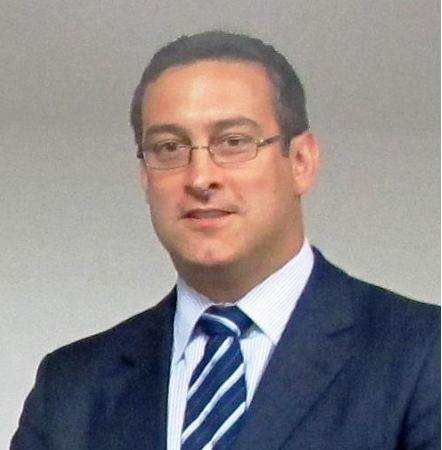
Reeve Wolford serves as Head of the Aerospace Program at Ukraine Foundation, where he leads initiatives focused on aerospace innovation, unmanned systems, space technology, and international cooperation. A recognized expert at the intersection of aerospace, defense, and emerging technologies, he has spent more than two decades advising governments, industry leaders, and technology companies across the United States, Latin America, and global markets.
Mr. Wolford is President of Pinima, Inc., a U.S.-based company providing advanced monitoring and intelligence services. Pinima supports government and commercial clients through ISR, UAV and geospatial intelligence, agricultural analytics, carbon monitoring, and mineral surveying, drawing on extensive operational experience worldwide.
He is the founder of Arcturus Advisors LLC, a consultancy focused on aerospace, defense, and space-sector strategy across Brazil and Latin America. Through Arcturus, he has advised leading companies including SpaceX (NASDAQ: SPCX), Lockheed Martin (NYSE: LMT), Boeing (NYSE: BA), Rocket Lab (NASDAQ: RKLB), OneWeb, Firefly Aerospace, ABL Space Systems, Astra Space (NASDAQ: ASTR), KBR (NYSE: KBR), SAIC (NASDAQ: SAIC), and TriSept. As Latin America Consultant to the CompTIA Space Enterprise Council, he organized major U.S. Space Industry Missions to Brazil, contributing to renewed bilateral cooperation and supporting the revival of the U.S.–Brazil Technology Safeguards Agreement, which enabled the launch of U.S. space technologies from the Alcântara Space Center.
Among several landmark commercial space initiatives, Arcturus Advisors became SpaceX’s first consulting partner outside the United States, supporting the company’s bid for the Amazônia-1 satellite launch services contract. Mr. Wolford also advised Theia Group on the concession of a launch platform at Alcântara and supported Orion Applied Science & Technology in securing the first space-launch license issued to a U.S. company in Brazil. He has further advised Brazilian drone company Stella Tecnologia on international business development, strategic partnerships, and supply-chain resilience.
Earlier in his career, Mr. Wolford strengthened defense cooperation between the United States and Brazil through the Brazil–U.S. Business Council, where he spearheaded the Defense and Security Task Force, a key platform for bilateral defense cooperation, and contributed to the eventual signature of the U.S.–Brazil Research, Development, Testing and Evaluation (RDT&E) Agreement.
Mr. Wolford has also contributed to academic debate in Latin America on strategic and defense issues. This includes a partnership with Brazil’s leading defense think tank, Fundação Getulio Vargas (FGV), to convene a high-level discussion for Brazil’s Ministry of Defense, Armed Forces, and Defense Industry on “Guaranteeing Defense Budgets in Times of Crisis: Lessons from France, Germany, and the United States.” In addition to numerous speaking roles, he has published articles including an Op Ed in SpaceNews entitled “U.S., Brazil should act now to forge a partnership in space.”
For his contributions to the U.S.–Brazil aerospace and space relationship, he has been formally recognized by the Brazilian Space Agency and the Brazilian Ministry of Defense.
Reeve Wolford is a graduate of Georgetown University’s School of Foreign Service.
He is fluent in English, Spanish and Portuguese, and conversant in Italian.
New York: Read the latest publication with Asia Society of our International Advisory Board member, Ambassador Pierre Andrieu on China-Russia Relations since the Start of the War in Ukraine.

In his August 20, 2025 Asia Society report “China-Russia Relations Since the Start of the War in Ukraine,” our International Advisory Board Member, Ambassador Pierre Andrieu, Senior Fellow at Asia Society Policy Institute’s Center for China Analysis, scrutinizes how Russia’s invasion of Ukraine has accelerated Sino-Russian cooperation -particularly through the rapid deepening of trade, sanctions circumvention, and the poignant asymmetry of the relationship despite the “no-limits” rhetoric that preceded the conflict.
China-Russia Relations Since the Start of the War in Ukraine – August 20, 2026
Doha: Watch our International Advisory Board Member, Dr. John A. Pennell, commenting to Al Jazeera on the Alaska Summit

Princeton University & Modern War Institute At West Point: Dr. Mariya Heletiy Publishes “The Balkans Model and Conditions for Peace in Ukraine” In the Irregular Warfare Initiative
We are proud to share the latest contribution from Dr. Mariya Heletyi, whose new article has been published by the Irregular Warfare Initiative, a joint project of Princeton University’s Empirical Studies of Conflict and the Modern War Institute at West Point.

In “The Balkans Model and Conditions for Peace in Ukraine,” Dr. Heletiy draws on the experience of the Balkan conflicts to analyze the irregular warfare nature of Russia’s invasion of Ukraine and what it means for peace-building. Her analysis offers a sobering but necessary perspective: that peace in Ukraine cannot be built on traditional negotiations alone.
Using the backdrop of Russia’s repeated violations of ceasefire agreements -most recently its broken “Easter truce”- Dr. Heletiy argues that today’s hybrid conflicts require more than diplomatic handshakes. The war in Ukraine spans far beyond the battlefield, touching diplomatic, informational, economic, humanitarian, and military fronts. As she points out, ceasefires in irregular conflicts often serve less as a path to peace and more as a pause for regrouping and rearming.
Drawing lessons from the Balkans, Dr. Heletiy proposes that irregular warfare tools -such as economic pressure, information campaigns, and unconventional tactics- must be part of any comprehensive strategy for sustainable peace. Her article warns against the false comfort of conventional approaches that do not account for the ideological drivers, asymmetries, and non-state actors that continue to shape today’s conflicts.
We encourage everyone interested in peace and security in Ukraine and beyond to read Dr. Heletiy’s full piece, which brings deep insight and strategic clarity to one of the most pressing issues of our time.
Washington: Check out the latest media appearances of Ukraine Foundation’s International Advisory Board Member John Pennell
John Pennell on Russia’s Actions in Ukraine and Syria in The Cognitive Crucible by the Information Professionals Association – September 16, 2025
In the episode, Dr. John Pennell explores how Russia’s use of irregular warfare and information operations has evolved across Ukraine and Syria from 2014 to 2022, arguing that Russia has increasingly blended kinetic, cyber, influence, and hybrid tactics to shape outcomes. He discusses how the information environment has become a key domain in contemporary conflict, emphasizes the growing role of non-state actors (like criminal syndicates) in amplifying Russia’s messaging, and calls for better public literacy about information threats, more research into how adversaries adapt their strategies, and more integration between scholars, policymakers and practitioners in responding to this more complex character of war.
John Pennell on “Did Syria Prepare Russia for Hybrid Warfare in Ukraine?” in At the Boundary by the Global and National Security Institute of the University of South Florida – August 11, 2025
In the “Did Syria Prepare Russia for Hybrid Warfare in Ukraine?” episode of At the Boundary, Dr. John Pennell discusses how Russia leveraged its 2015 intervention in Syria as a proving ground for techniques later applied in Ukraine. He argues that operations in Syria allowed Moscow to test tools like drones, electronic warfare, information campaigns, and proxy forces under real combat conditions. Dr. John Pennell traces how Russia adapted those hybrid warfare methods—initially developed in the Syrian context—to the conflict in Ukraine, especially in its early phases (Crimea, Donbas), emphasizing plausible deniability, disinformation, and local proxies. He also highlights the importance of understanding this operational lineage for NATO, the U.S., and partners as they seek to counter Russia’s evolving toolkit.
FAQs
What is the focus of Ukraine Foundation’s work?
Ukraine Foundation is an independent, mission-driven research and impact organization dedicated to advancing peace, resilience, and innovation in Ukraine. Our work combines rigorous policy research with practical initiatives that strengthen Ukraine’s international partnerships, support innovation and technology, and promote cultural resilience amid the ongoing war.
How does the Foundation turn research into impact?
We believe research should lead to real-world change. Our policy programs —Ukraine in Europe, China in Ukraine, and Ukraine in the Global South— produce insights that shape international dialogue and policy. At the same time, our impact initiatives foster cooperation between governments, businesses, academia, and civil society, ensuring that ideas translate into action for Ukraine’s security, prosperity, and influence.
How can individuals and organizations engage with the Foundation?
Engagement is central to our mission. Partners, experts, and supporters can collaborate through joint research projects, public events, and strategic initiatives in innovation and culture. We also welcome contributions to our programs that amplify Ukraine’s voice globally and strengthen its resilience at home.
How can I support Ukraine Foundation?
You can support our mission by contributing financially, partnering on research or impact projects, or amplifying our work through your professional networks. Every contribution -whether funding, expertise, or visibility- helps us strengthen Ukraine’s resilience and global partnerships.
Does Ukraine Foundation accept volunteers or research fellows?
Yes. We welcome dedicated professionals, researchers, and students who want to contribute to our policy and impact agenda. Opportunities range from short-term projects and fellowships to longer-term engagement with our programs and initiatives.
How can organizations collaborate with the Foundation?
We actively partner with think tanks, universities, governments, businesses, and NGOs to co-develop research, host events, and implement projects that drive meaningful change. Organizations interested in collaboration can reach out to us directly to explore tailored partnerships.